
A climate adaptive riverfront in Randers
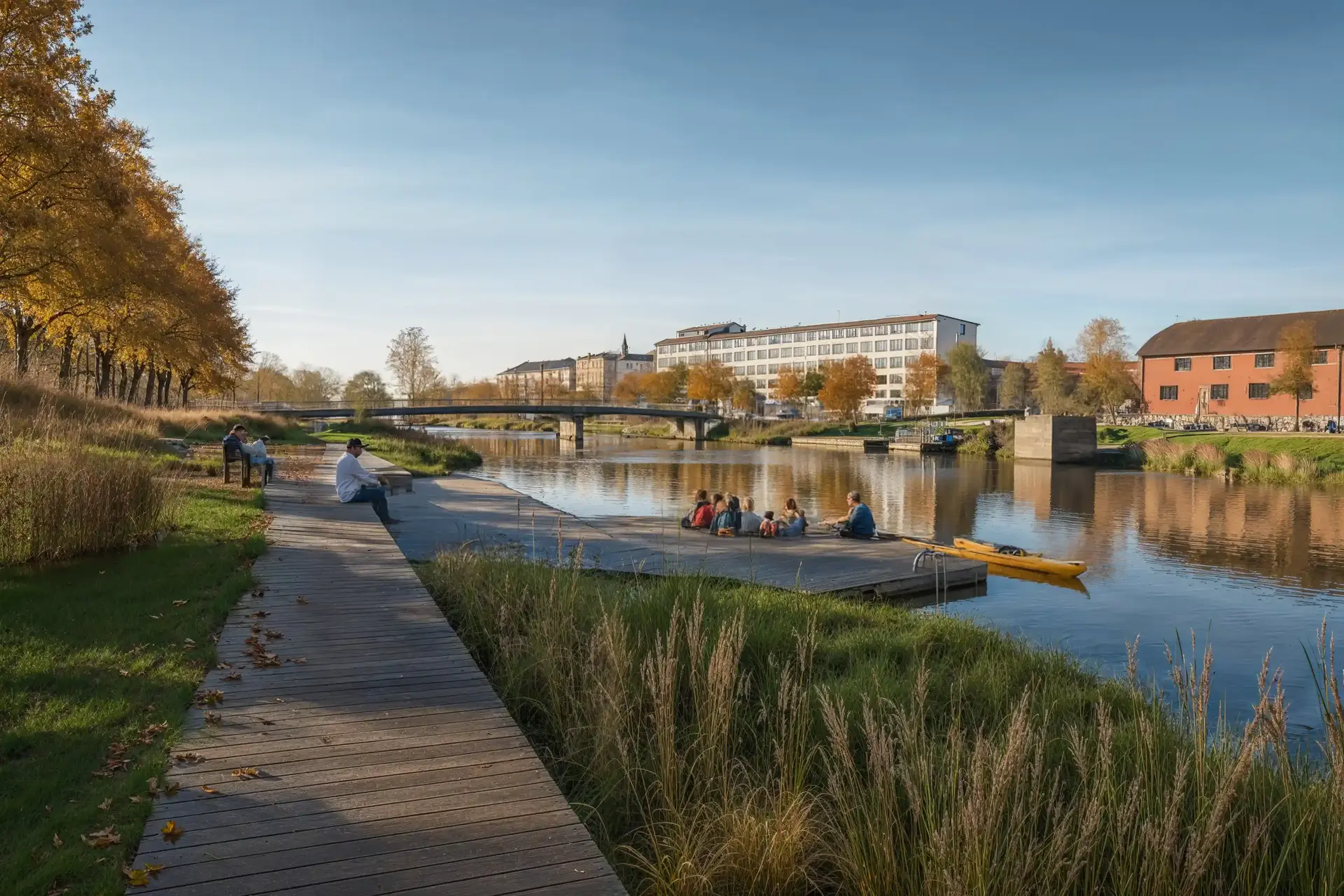
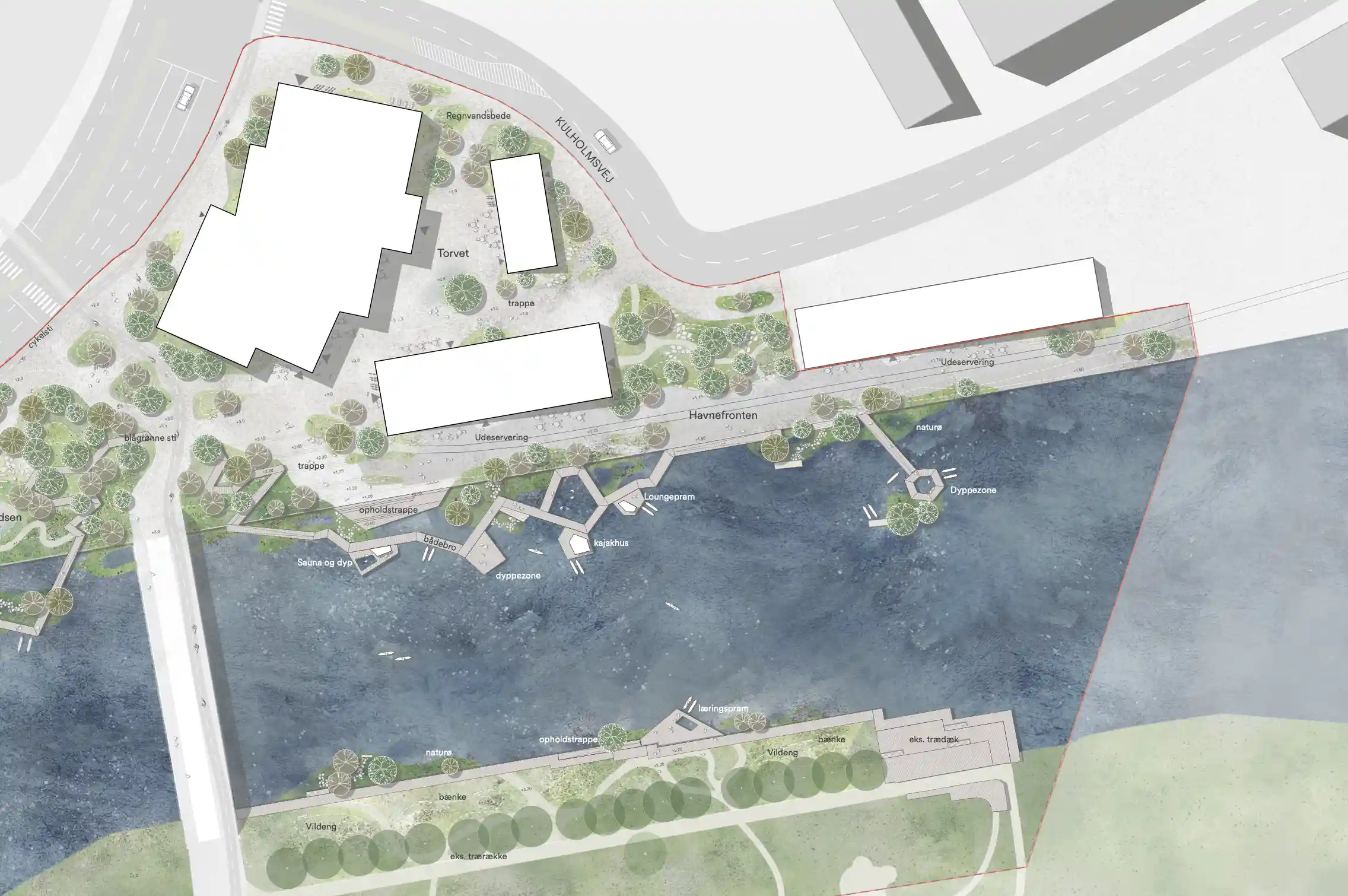
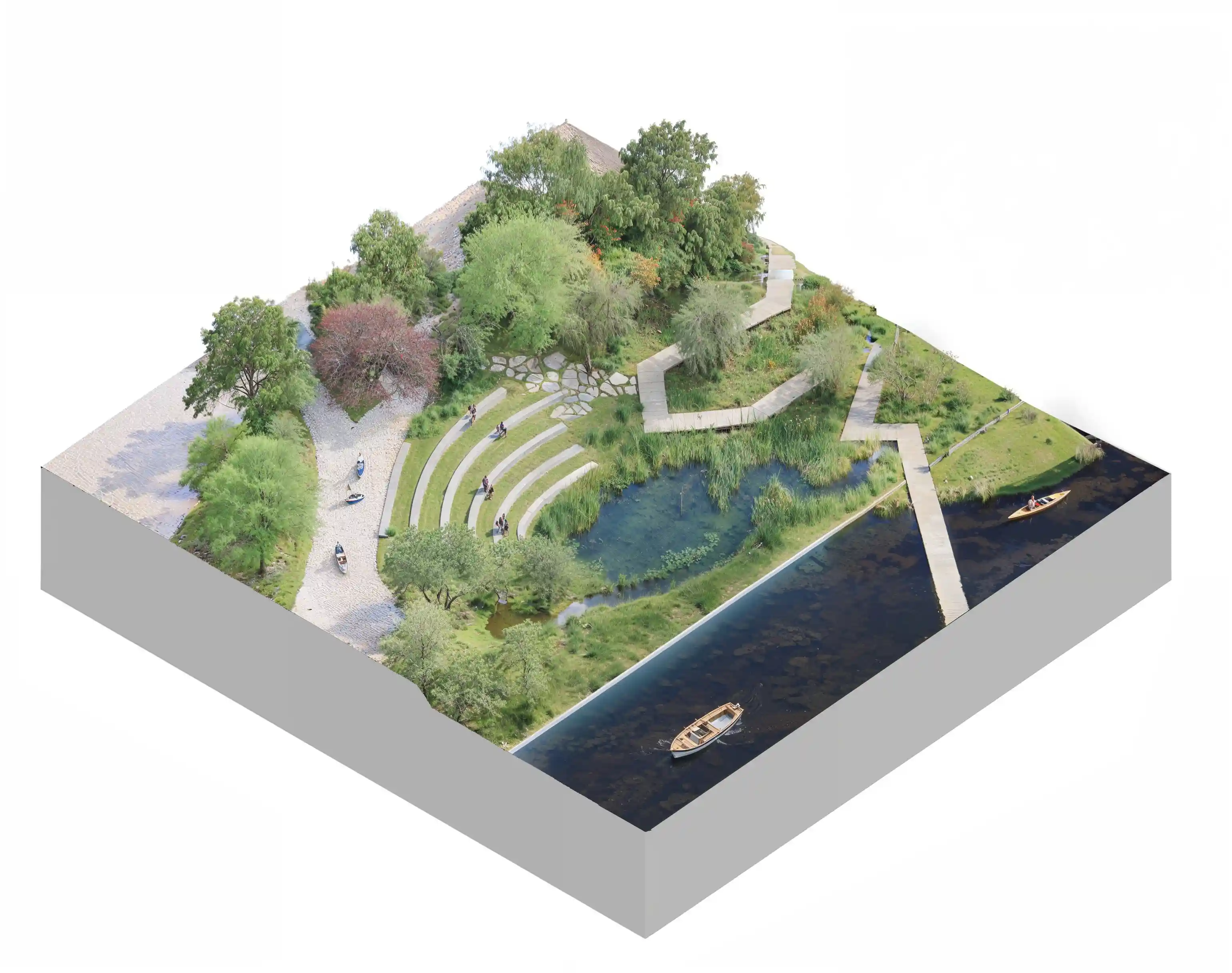
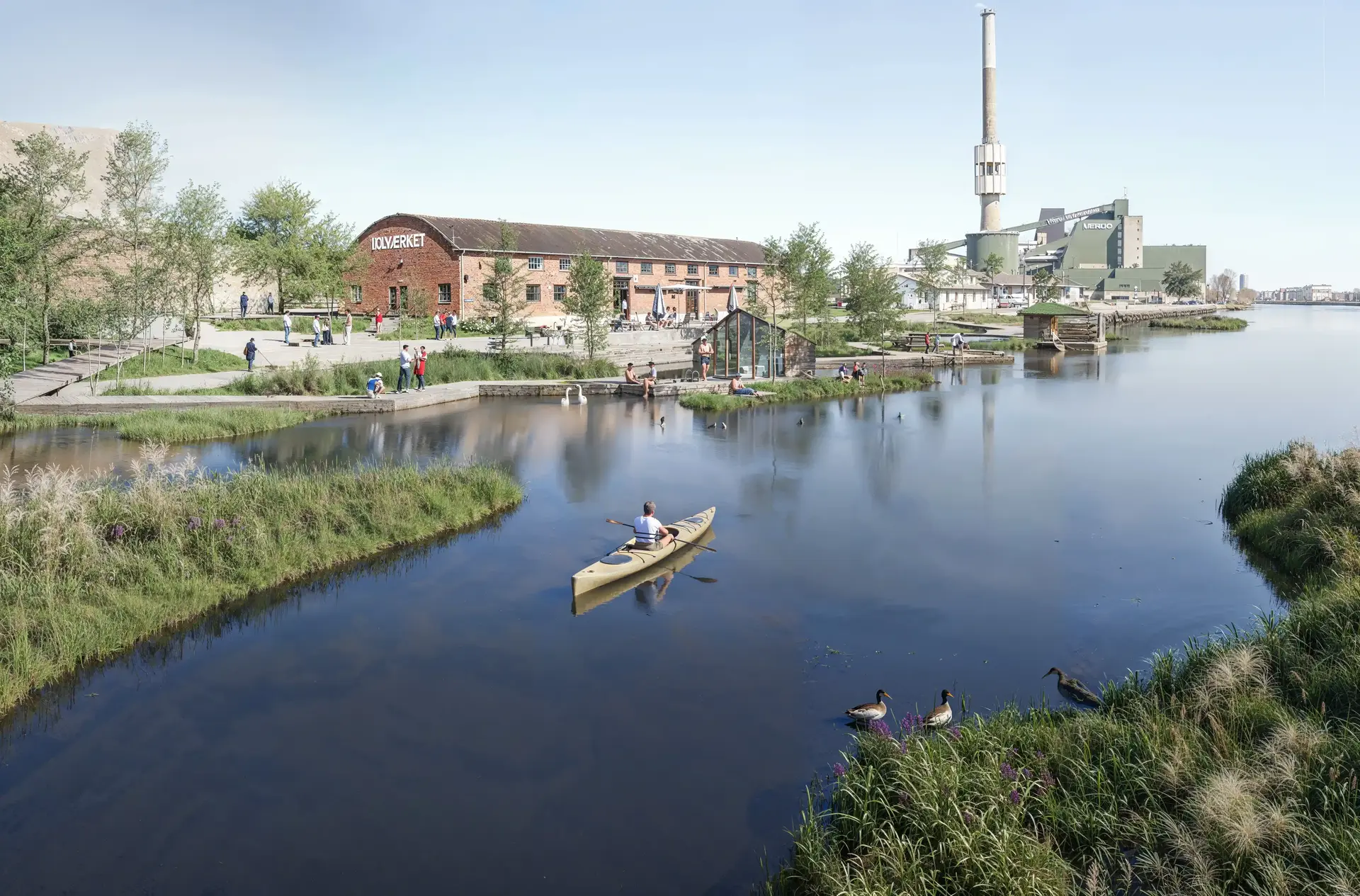
The Riverbed Project explores how climate adaptation can be integrated into the urban landscape as both an aesthetic gesture and an active interpreter of water’s movement. The design reintroduces the natural dynamics of the river through floating landforms, artificial islets and legible technical elements. The flow of water is used to shape immersive public spaces, where climate adaptation becomes a sensory and narrative part of the city’s identity.
MAST’s contribution focused on terrain strategies and hydrodynamic sections, with an emphasis on spatial clarity, aesthetic readability and public access to the water. The project is a direct expression of our method, in which transitional waterfront zones are developed as resilient, inclusive and vibrant urban spaces — supporting the broader ambition to embed aesthetics as a lasting value in climate adaptation.